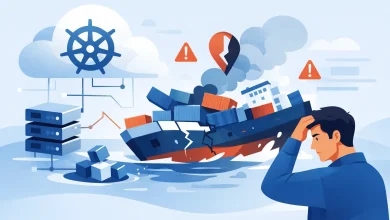
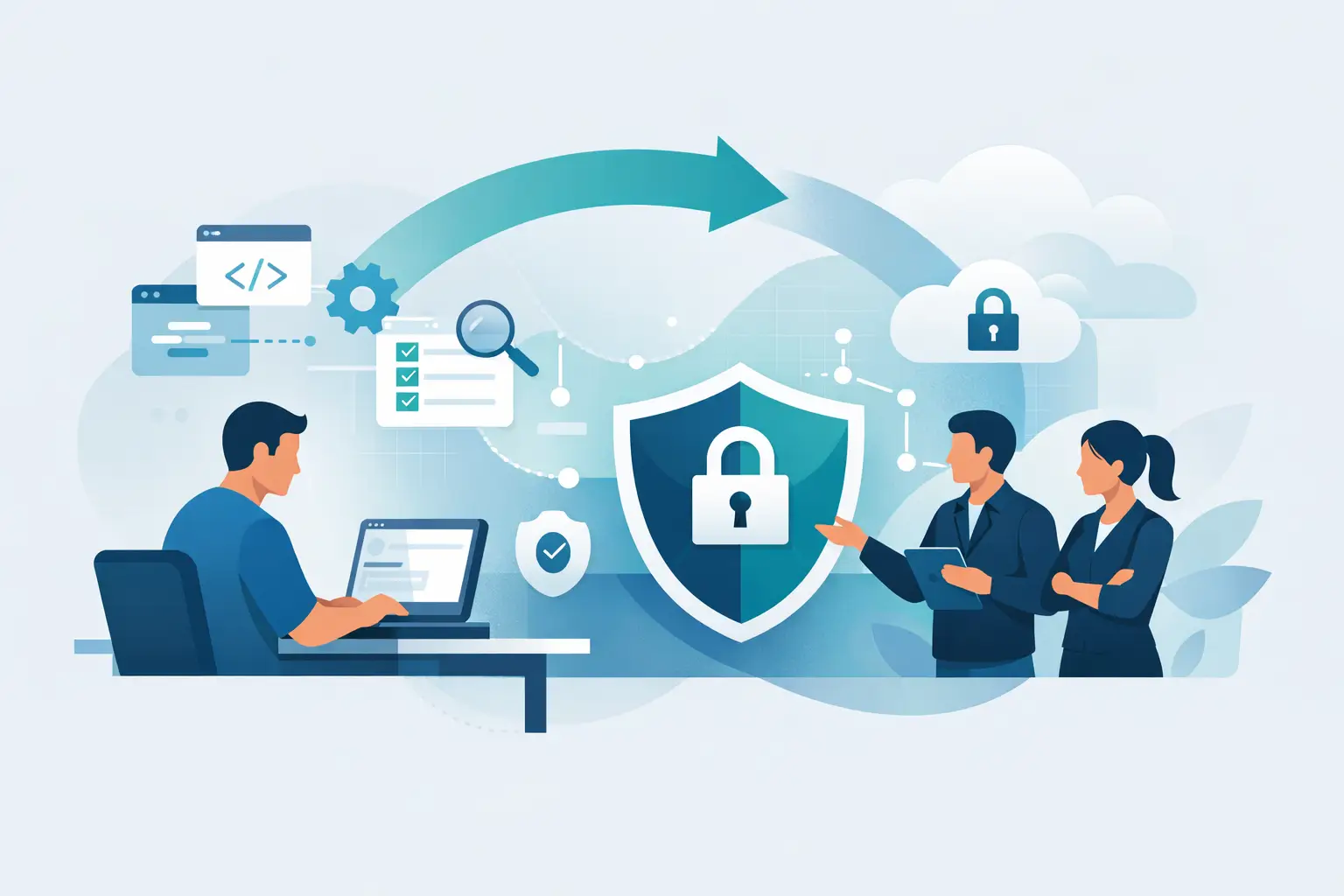
A critical vulnerability found after production deployment is rarely just a security problem. It becomes an emergency release, an interrupted sprint, a customer-risk conversation, and often a lesson in how late feedback creates expensive work. Shift left security best practices move meaningful security checks closer to the moment code, infrastructure, and dependencies are created – when developers can still fix issues quickly and with context.
The goal is not to make every developer a full-time security analyst or to block every pull request over a low-risk finding. It is to build a delivery system where secure choices are the easy choices, high-confidence risks reach the right people quickly, and security teams can focus on the threats automation cannot resolve.
What shifting security left really means
Shifting left means introducing security activities earlier in the software delivery lifecycle. In practice, that includes threat modeling during design, secure defaults in development environments, automated scanning in pull requests, and policy checks before infrastructure reaches a cloud account.
It does not mean security ends before deployment. A static analysis tool cannot detect every authorization gap, business logic flaw, or runtime attack path. Mature DevSecOps programs combine earlier prevention with runtime monitoring, incident response, and continuous reassessment. The shift is about shortening the feedback loop, not pretending production security is optional.
The most useful way to judge a shift-left initiative is simple: can a developer understand, reproduce, and address the finding while the relevant code and decision are still fresh? If the answer is no, the organization may be generating alerts rather than improving security.
Start with a shared risk model
Teams often begin by enabling every scanner available and then wonder why developers ignore the results. Tooling without prioritization creates noise. Before choosing controls, define what matters most for each application and service.
A public payment API, an internal reporting dashboard, and a prototype with synthetic data have different threat profiles. Consider the data handled, authentication model, exposure to the internet, privileged operations, regulatory requirements, dependency footprint, and blast radius if the service is compromised. This context lets teams distinguish a critical exposed secret from an informational dependency warning.
Use lightweight threat modeling at design time
Threat modeling should be a short engineering conversation, not a document that disappears into a compliance folder. When a team designs a new feature, ask where data enters the system, where trust boundaries exist, what identities can perform sensitive actions, and what happens if a dependency fails or is malicious.
For example, adding document uploads raises questions about file validation, malware scanning, object storage permissions, download authorization, and retention. Identifying those decisions before implementation is far cheaper than discovering them during a penetration test.
For higher-risk services, capture the answers in an architecture decision record or ticket. The artifact matters less than making security assumptions visible and reviewable.
Make secure development paths easier than insecure ones
Developers move quickly when platforms provide clear, reusable building blocks. If the secure path requires filing three tickets, finding a hidden wiki page, and writing custom encryption code, teams will work around it under deadline pressure.
Provide approved libraries and templates for common needs such as authentication middleware, input validation, secrets retrieval, logging, API authorization, and secure cloud provisioning. A paved road for application deployment should include least-privilege identity roles, encrypted storage, network restrictions, and standard observability from the start.
This is where platform engineering and security engineering meet. Security controls embedded in templates, internal developer portals, and CI/CD workflows scale better than one-off review comments. They also reduce variation, which makes systems easier to audit and maintain.
There is a trade-off. A platform that is too rigid can slow experimentation or fail to fit specialized workloads. Offer an exception process for legitimate cases, but make exceptions visible, time-bound, and reviewed. The answer should not be an untracked shell script that bypasses policy indefinitely.
Automate the checks that fit the code lifecycle
Automation is central to shift left security, but each control belongs at a different point in the workflow. Fast checks should run locally or on every pull request. More expensive scans can run after merges, nightly, or before releases.
A practical baseline covers four areas:
- Secret scanning to prevent API keys, tokens, private keys, and passwords from entering source control.
- Software composition analysis to identify vulnerable or unmaintained open-source dependencies.
- Static application security testing to flag risky code patterns, such as injection paths or unsafe deserialization.
- Infrastructure-as-code scanning to catch cloud misconfigurations before Terraform, CloudFormation, or similar definitions are applied.
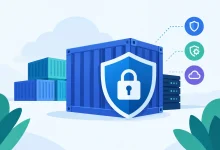
Container image scanning and API contract testing are also valuable, particularly for teams shipping services through Kubernetes or cloud-native platforms. The right combination depends on the stack. A Java service with a large Maven dependency tree may prioritize composition analysis, while a cloud-heavy team may get more immediate value from infrastructure policy checks.
Avoid treating scanner output as absolute truth. Tune rules based on the languages, frameworks, and attack surface your organization actually uses. Suppressions should require a reason, an owner, and ideally an expiration date. Otherwise, temporary exceptions become permanent blind spots.
Keep pull-request feedback fast and actionable
A pull request is a high-leverage security checkpoint because the author and reviewer already have the change open. But it is also a poor place for a 30-minute pipeline or 200 ambiguous warnings.
Run high-signal checks first and report findings in language developers can act on. A useful finding identifies the file and line, explains the risk in plain terms, shows the relevant data flow when possible, and recommends a safe remediation. It should also indicate severity and whether the issue is newly introduced or inherited from existing code.
Blocking merges makes sense for confirmed secrets, critical vulnerabilities in newly added dependencies, or policy violations that expose sensitive infrastructure. Blocking every medium-confidence alert usually leads to rushed suppressions and distrust. Start with a narrow set of hard gates, measure their quality, and expand only when teams see consistent value.
Treat dependency security as an ownership problem
Modern applications are assembled from packages, images, SaaS integrations, and managed services. That accelerates delivery, but it also means a small dependency change can introduce a serious risk.
Create an inventory that connects dependencies to the services that use them. A software bill of materials can help, but it is only useful if teams can answer practical questions: Is the vulnerable package reachable? Is the affected service internet-facing? Is a patched version compatible? Who owns the upgrade?
Set expectations for update cadence. Teams may patch critical exploitable vulnerabilities within hours or days, while low-risk upgrades can follow regular maintenance windows. The exact service-level objective depends on business impact and available mitigations. A back-office tool and a customer-facing identity service should not share the same response timeline.
Pin versions where appropriate, verify package provenance, and avoid pulling unreviewed dependencies from untrusted registries. For build systems, protect CI credentials and require trusted, reproducible build inputs. Supply chain security is not one tool purchase – it is a collection of disciplined controls across code, build, and release processes.
Put security expertise into the development loop
Security champions are often the missing link between centralized security teams and product squads. A champion does not approve every release or replace professional security review. They help teams interpret standards, raise risks early, and improve the feedback loop from real development work.
Give champions defined responsibilities and protected time. They can facilitate lightweight threat models, review recurring findings, validate team-specific playbooks, and bring unresolved issues to security specialists. Without time and authority, the title becomes another unpaid operational burden.
Security teams should also publish office hours, code examples, and short guidance for recurring issues. If developers repeatedly struggle with authorization rules or secret rotation, that is a product problem in the internal security experience. Fix the documentation, template, or platform capability instead of repeating the same training slide.
Measure outcomes, not activity
A dashboard showing thousands of scanned repositories may look impressive while leaving critical exposures unresolved. Better metrics show whether the program changes risk and delivery behavior.
Track time to remediate findings by severity, the percentage of new code covered by relevant checks, secret exposure trends, overdue dependency fixes, and the false-positive rate for blocking rules. Also look for workflow friction: how often pipelines fail, how frequently exceptions are granted, and how long developers wait for security help.
Use these metrics carefully. Comparing teams without context can encourage gaming, such as reclassifying findings or avoiding scans. The useful question is not which team has the fewest alerts. It is whether each team is reducing meaningful risk without making safe delivery painfully slow.
Keep runtime security in the picture
Shift left catches preventable issues earlier, but production remains the source of truth for real behavior. Monitor authentication failures, unusual privilege changes, anomalous API patterns, suspicious cloud activity, and vulnerable workloads actually running in your environment.
Runtime findings should feed back into earlier controls. If an incident stems from an overly broad storage policy, update the infrastructure template and policy rule. If a recurring injection issue reaches production, improve the framework guidance and add a targeted test. This feedback cycle is what turns shift left from a set of scanners into an engineering practice.
The strongest security programs do not ask developers to slow down for security. They give developers fast feedback, secure defaults, and clear ownership so that shipping responsibly becomes part of how good software gets built.