
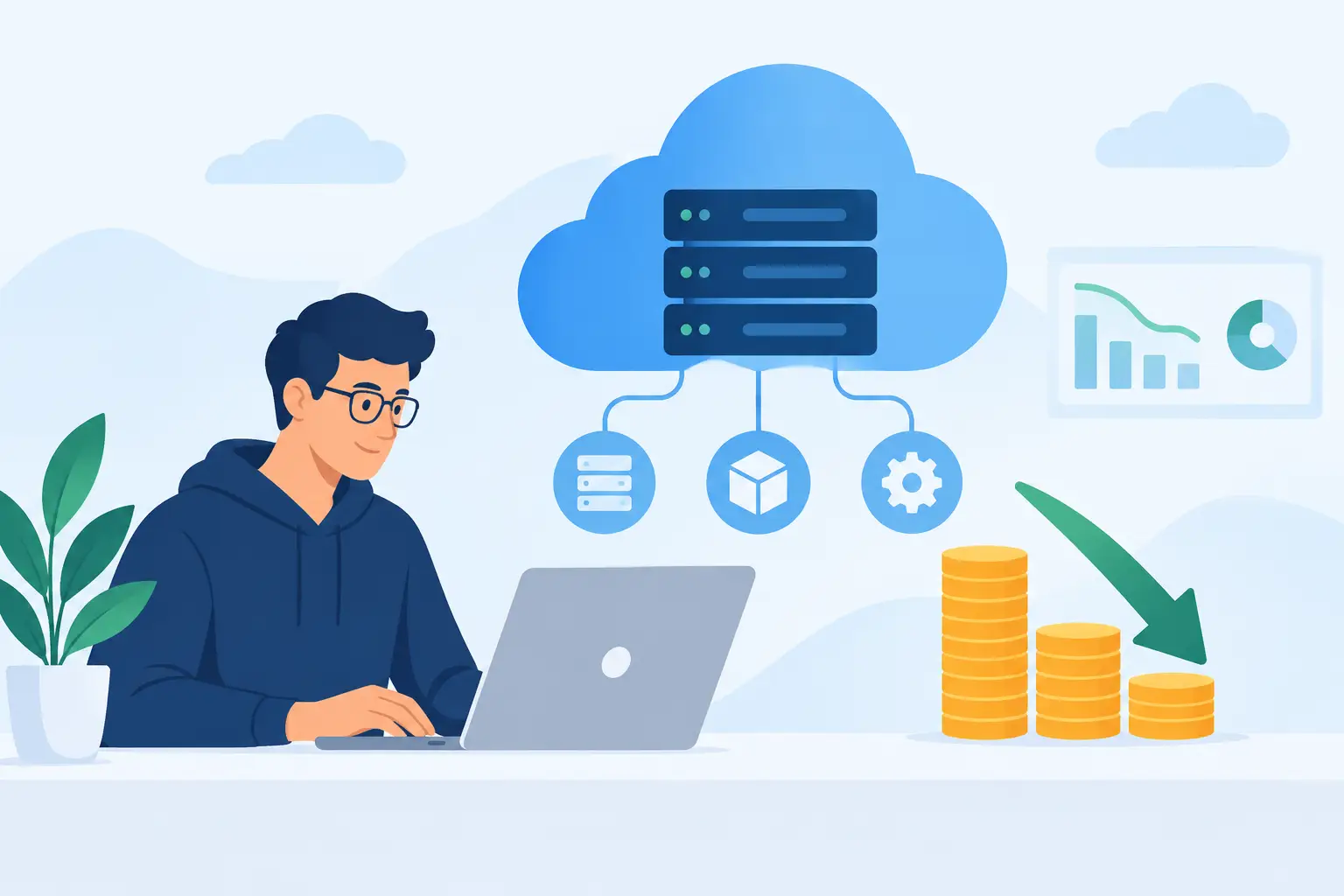
A surprise cloud bill is rarely caused by one careless deployment. More often, it is the accumulated result of sensible short-term decisions: adding capacity for a launch, retaining logs during an incident, creating a development environment for a project that ended, or choosing managed services without modeling their consumption. Effective cloud cost reduction fixes those patterns without asking teams to gamble with performance, security, or delivery speed.
For engineering organizations, the goal is not simply to spend less. It is to make cloud spending understandable, intentional, and proportional to customer value. That requires more than a finance review at the end of the month. It requires operational signals that developers, platform teams, architects, and leaders can use while decisions are still easy to change.
Start Cloud Cost Reduction With Visibility
Cost optimization begins with a basic question: can the team explain what created last month’s bill? If the answer is a vague reference to compute, storage, or data transfer, the organization is not ready to optimize reliably. A cloud invoice groups charges by service, but engineering decisions happen by application, environment, tenant, feature, and team.
Establish a tagging or labeling standard that reflects how the business operates. At minimum, resources should identify an owner, application or product, environment, cost center, and lifecycle status. Tags are not glamorous infrastructure work, but they turn an undifferentiated bill into a useful operational dataset.
Tagging alone is not enough. Teams need reporting that connects spend to technical and business metrics. For an API platform, compare cost with request volume, latency targets, active customers, and error rates. For a data pipeline, measure cost per gigabyte processed or per successful job. For an internal development platform, track cost per active developer or per deployment. These ratios reveal whether spend is rising because demand is healthy or because the system is becoming inefficient.

Shared services need special treatment. Central logging, networking, security tooling, and Kubernetes clusters often support several teams. Charging every dollar back to a single product can create friction, while treating shared infrastructure as free removes incentives to use it thoughtfully. Use a documented allocation model, review it periodically, and be explicit about what it can and cannot represent.
Find the Waste That Does Not Improve Reliability
The quickest savings usually come from resources that are running without a meaningful workload. Unattached volumes, obsolete snapshots, idle load balancers, unused IP addresses, abandoned test databases, and old machine images are common examples. They may be individually inexpensive, but large accounts accumulate them quickly.
Create lifecycle rules for temporary infrastructure. A preview environment should have an expiration date. Sandboxes should shut down outside agreed working hours when they do not support global testing. Proofs of concept should be reviewed after a defined period. Automation is more dependable than asking every engineer to remember cleanup tasks after a busy release.
Be careful with blanket shutdown schedules. Some non-production environments support overnight batch work, international teams, security scans, or customer demonstrations. The right approach is an opt-out process with an owner and expiration date, not a rigid rule that causes engineers to work around the platform.
Storage deserves the same attention. Object storage is cheap until data volume, replication, retrieval, and request costs are considered together. Define retention classes based on the value of the data. Production audit records may need long retention. Debug artifacts from a completed build usually do not. Log retention should support incident response, compliance, and capacity planning, rather than preserving every event indefinitely by default.
Rightsize for Real Demand, Not Peak Anxiety
Overprovisioning is understandable. Teams want room for traffic spikes and want to avoid an outage caused by a resource limit. But keeping every workload sized for a theoretical maximum is an expensive substitute for observability and capacity planning.
Rightsizing should use sustained utilization, peak patterns, latency, queue depth, memory pressure, and error rates. CPU alone is a poor signal for many services. A database might appear lightly utilized while being constrained by memory, IOPS, connection limits, or query design. A container workload can show low average CPU while experiencing short bursts that trigger throttling. Review the metrics that actually indicate service health.
Autoscaling can reduce waste, but it is not automatically cheaper. Aggressive scaling policies may create churn, increase cold-start latency, or amplify downstream load. Minimum instance counts are sometimes necessary for predictable response times. For customer-facing systems, a modest baseline may be worth the cost. The decision should be made against a stated service-level objective, not based on a generic utilization target.
Commitment discounts and reserved capacity introduce another trade-off. They can provide major savings for stable workloads, especially core databases and steady production compute. They can also become waste when teams commit before understanding demand or when an architecture is about to change. First establish a usage baseline, then commit gradually. Review coverage and utilization separately, because purchasing enough commitments does not help if the committed capacity is not used.
Make Architecture Choices Cost-Aware
Architecture affects cloud spending long before a resource appears on an invoice. A service that makes repeated cross-region calls, writes multiple copies of large payloads, or emits high-cardinality telemetry can be technically functional and still create a costly operating model.
Data transfer is a frequent blind spot. Charges can grow when workloads span availability zones, regions, cloud accounts, content delivery paths, or external networks. Map high-volume flows between services and ask whether the placement still makes sense. Sometimes co-locating tightly coupled services reduces transfer cost and latency. In other cases, regional separation is justified for resilience or regulatory requirements. Savings should never erase a deliberate recovery strategy.
Managed services also require context. A managed database, queue, or serverless function may cost more per unit than a self-managed alternative, yet save substantial engineering time and reduce operational risk. Cloud cost reduction is not an argument against managed services. It is an argument for evaluating their full cost: infrastructure, staffing, maintenance, incident exposure, and opportunity cost.
For container platforms, watch the gap between requested and consumed resources. Cluster schedulers reserve capacity based on requests, so inflated requests can strand compute even when dashboards show low actual usage. Set requests from observed workload behavior, apply sensible limits, and revisit them after meaningful application changes. Platform teams should provide guardrails and visibility rather than forcing every product team to become a Kubernetes billing specialist.
Turn Cost Into a Delivery Signal
The most sustainable savings happen when cost information reaches engineers during planning and delivery. Monthly reports are useful for governance, but they arrive too late to influence an infrastructure change that has already spread across environments.
Add cost estimates to infrastructure-as-code reviews for material changes. A new database tier, NAT gateway, retention policy, or high-throughput messaging configuration should prompt a conversation before it reaches production. The estimate will not be perfect, especially for usage-based services, but directionally accurate feedback is far better than no feedback.
Budgets and anomaly alerts should be targeted. A single account-level alert is often too broad to be actionable. Alerts tied to an application, environment, or known usage metric help the right team investigate quickly. Tune them carefully: noisy alerts train people to ignore them, while alerts that arrive after a major overspend provide little value.
Cost ownership should be collaborative, not punitive. Finance teams can clarify forecasting and procurement constraints. Cloud platform teams can create policies, dashboards, and reusable infrastructure modules. Application teams can decide what behavior is necessary for their users. Security teams can ensure that savings do not weaken encryption, logging, backup, or access controls. When one group owns cost in isolation, optimization usually becomes either a spreadsheet exercise or an unpopular set of restrictions.
Measure Savings Against Engineering Outcomes
A lower bill is not always a successful optimization. If a change increases incidents, slows deployments, creates manual maintenance work, or causes customer-facing latency, the apparent savings may be temporary. Track cloud spend alongside reliability and delivery indicators such as availability, mean time to recovery, deployment frequency, and performance at peak load.
Set a review cadence that matches the pace of change. Fast-moving products may need weekly anomaly checks and monthly optimization reviews. Stable systems may benefit from quarterly architecture and commitment reviews. The goal is to create a repeatable habit, not a one-time cost-cutting campaign.
Cloud spending becomes easier to manage when it is treated as feedback from the architecture. Give teams clear ownership, timely data, and room to make informed trade-offs. The result is not merely a smaller invoice, but a platform that can grow with more discipline and fewer financial surprises.